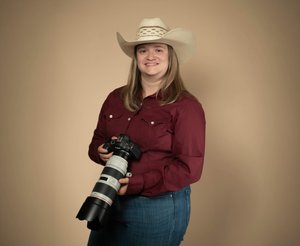
People often assume horse show photography is just horse show photography. A horse is a horse, an arena is an arena, and a camera is a camera... right?
Not even close.
I've spent weekends standing beside quiet hunter rings, patiently waiting for the perfect jump, and weekends ducking behind barriers as balloons exploded just a few feet away. Both are horse shows. Both are beautiful. But from behind the camera, they couldn't be more different.
Every horse show asks something different of the photographer. Sometimes it's patience. Sometimes it's precision. And sometimes it's trusting your instincts and pressing the shutter before your brain has even caught up to what's happening in front of you.
On paper, the job is exactly the same. Show up. Find good light. Focus on the horse. Capture the moment.
In reality? They’re almost two completely different sports to photograph.
At an English show, everything feels a little more calculated. Whether it's hunters, jumpers, equitation, or dressage, there's usually time to breathe. I can watch a few trips, learn how a horse moves, and start anticipating where those standout moments are going to happen. Sometimes it's the perfect jump, sometimes it's an extended trot, and sometimes it's just a quiet moment between horse and rider. Patience goes a long way.
Then you walk into a Western show.
Now you've got barrel racers running full speed, reiners throwing dirt with a sliding stop, ranch horses making the hardest maneuvers look effortless, or mounted shooters weaving through a pattern while balloons are exploding all around them. The pace changes completely. Everything happens fast, and if you're still thinking about the last shot, you've probably already missed the next one.
That's probably the biggest difference between the two. In the English world, I'm usually chasing elegance and precision. In the Western world, I'm chasing grit, speed, and raw emotion. One isn't better than the other, and one certainly isn't harder to photograph. They just tell two completely different stories, and it's my job to know how to tell both.
When I first started photographing different disciplines, I thought I'd be able to walk in with the same mindset every weekend. I couldn't have been more wrong. Every show has taught me something new. The more disciplines I photograph, the more I realize that being a good horse show photographer means becoming a student of the sport. Learning what riders are working toward, what moments they're proud of, and what makes each discipline unique has become just as important as learning my camera.
The biggest lesson I've learned isn't about camera settings or lenses. It's learning the sport you're photographing. Every discipline has moments that the competitors are proud of, and if you don't understand what those moments are, you're probably going to miss them. A dressage rider may treasure a perfectly executed movement just as much as a barrel racer treasures a clean, blazing-fast run. A hunter rider may love the photo where everything looks effortless, while a mounted shooter wants the frame where the smoke is still hanging in the air, and every ounce of speed is on display.
That's what makes horse show photography so much more than pointing a camera at a horse. Every weekend, every discipline, and every rider has a different story to tell. The challenge isn't just freezing the action; it's understanding what matters to the people stepping into the arena.
At the end of the day, neither is harder or better. They're simply different. Both demand timing, anticipation, and a deep understanding of the sport. The camera may be the same, but the way it's used changes the moment you step into the arena.